
Lanzarote of Fire – How Volcanoes Changed the Island Forever

Lanzarote is an island born from fire.
You only need to travel through its landscape to realise it: vast expanses of dark lava, craters, red and black mountains, rocks shaped by volcanic eruptions, and a land that seems to still preserve the heat of its origins.
Here, volcanoes are not simply part of the landscape. They are the force that shaped the island, changed its colours and morphology, and created the unique environment that still makes Lanzarote different from any other island in the Canary Islands.

Volcanoes in Lanzarote: when Lanzarote Changed Forever
Between 1730 and 1736, Lanzarote experienced one of the most important volcanic eruptions in its history.
For six years, the earth continued to shake and fire emerged from numerous volcanic vents, covering a huge part of the island with lava and volcanic material.
What was a catastrophe for the inhabitants of the time transformed the landscape forever. Farmland and villages were buried or affected by the lava, while new craters, mountains and valleys appeared in their place.
The eruptions changed not only the landscape, but also the way people would live and cultivate this part of the island. Even today, as you travel across Lanzarote, it is possible to read the story of those eruptions in the shape of the land.
Conil, the village where Casa Mialma Lanzarote is located, was also affected by the volcanic events of the eighteenth century. Lava and volcanic material reached the surrounding area, and the village was subsequently rebuilt.
This history creates a special connection between Conil and the volcanic landscape around it: fire is not something distant, but part of the history of the place we call home.

A Landscape Born from Lava
The eighteenth-century eruptions left behind a completely transformed landscape that can still be admired today as you travel through central and southern among the volcanoes of Lanzarote.
It is a landscape that is difficult to compare with other places in the Canary Islands.
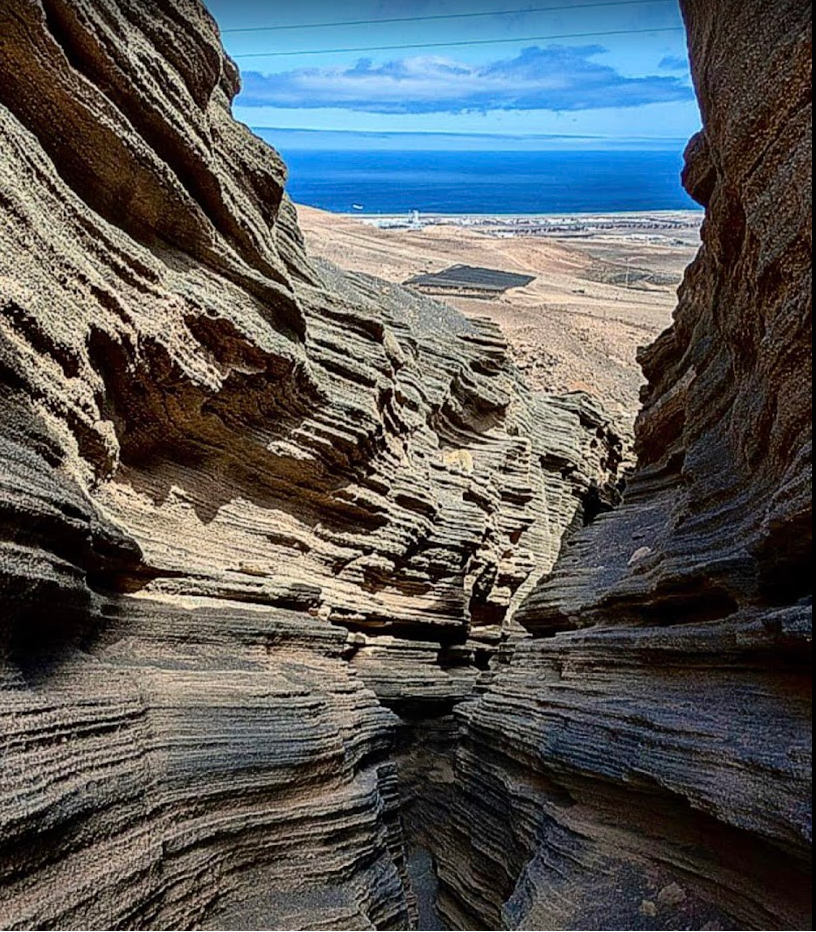
Solidified lava can be black and shiny or porous and reddish. Volcanic cones change appearance depending on the materials they are made of and the light throughout the day. Some are almost perfectly symmetrical, while others look like mountains broken and sculpted by the wind.
The black of the lava is interrupted by the red and ochre of the volcanic cones, the grey of the ash and, in some places, the green of vegetation slowly reclaiming the land.
It is precisely this contrast that makes Lanzarote's volcanic landscape so unique.
An Island of a Thousand Shapes
Perhaps the most fascinating thing about Lanzarote's volcanoes is the variety of their shapes.
There are perfectly recognisable volcanic cones, enormous craters, mountains in intense colours and expanses of lava that seem to stretch endlessly.
In some places, you can walk inside a crater. In others, it is the view from the top of a volcano that reveals the true scale of the eruptions.
And then there are the landscapes that hide what happened beneath the surface: tunnels, cavities and caves created by the movement of lava, such as those associated with the vast volcanic system of La Corona.
Lanzarote is therefore a volcanic island not only because of what you can see, but also because of what lies beneath the ground beneath our feet
Fire and Time
Perhaps the most surprising thing is seeing how time has slowly transformed a landscape born from destruction.
Where rivers of lava once flowed, there are now paths, roads, vineyards and small villages.
Vegetation has slowly begun to colonise the rocks. Lichens have found a way to survive on volcanic surfaces and, little by little, life has returned even to places that once seemed completely barren.
Yet the landscape still has the appearance of a young land.
Walking among the volcanoes, it is easy to feel as though the eruptions happened much more recently than the nearly three centuries that have actually passed would suggest.

From the Centre of the Island to Timanfaya
The most spectacular volcanic landscape stretches mainly across the central and southern parts of the island.
Volcán del Cuervo allows you to physically enter a crater. Nearby Montaña Colorada, on the other hand, shows just how intense the colours of a volcanic landscape can be.
Caldera Blanca offers a completely different perspective, allowing you to look down from above and appreciate the enormous extent of the lava flows.
And then there is Timanfaya, where volcanism becomes the absolute protagonist of the landscape.
Here, the eruptions created a territory so vast and extraordinary that it almost feels as though it belongs to another planet.
At the heart of the Montañas del Fuego, the underground heat can still be clearly felt. At Islote de Hilario, visitors can see demonstrations of the geothermal anomalies, while the famous Ruta de los Volcanes takes visitors by bus through some of the most spectacular landscapes in the park.
To observe the volcanoes of Lanzarote is to observe an island in the very process of its transformation.
For those staying at Casa Mialma Lanzarote, this story begins right here, between Conil, Montaña Blanca and the landscape created by fire.
And for those who want to discover these places more closely, Lanzarote offers countless paths and hiking trails.
Discover our guide to the volcanoes of Lanzarote and the trails you can explore during your stay at Casa Mialma Lanzarote.
Red volcanic rocks shaped by the fire of Lanzarote Three volcanic cones rising from Lanzarote’s dramatic volcanic landscape Hiking through Lanzarote’s volcanic landscape


Comments